

Independent reference adaptation · Editorial Policy
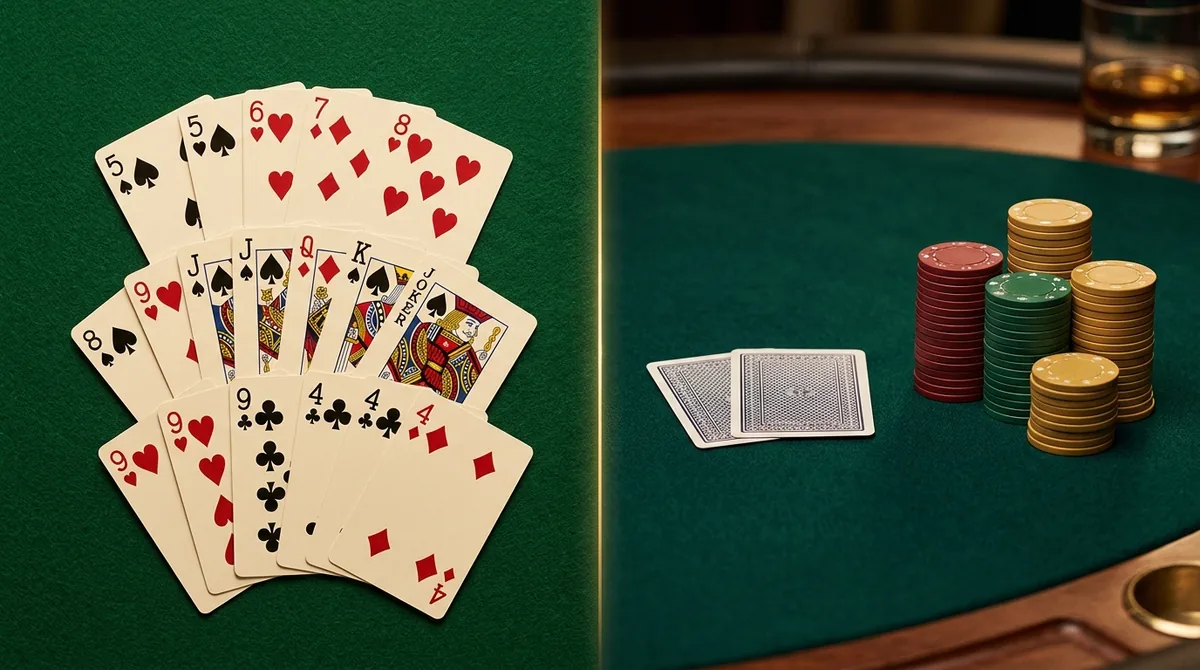
Rummy and Poker are both classic card games built on skill, but they reward completely different instincts. Rummy is a quiet, private puzzle — you arrange your own cards into sequences and sets and race to declare. Poker is a public contest of nerve — you bet, bluff and read opponents over shared and hidden cards. For Indian players deciding which to learn, the honest answer is "it depends on what you enjoy," and this comparison lays out exactly why.
India's favourite card games on your phone — claim your welcome bonus, play cash tables and tournaments, and withdraw to UPI.
Download Master APKOn this page
This contents list links directly to the main questions in Rummy vs poker. Choose the rule, account condition or worked example that matches your question, then follow the related topic links for the next step. All sections remain available in the same page without opening a separate language edition.
Quick Answer: Rummy or Poker at a Glance
If you want the short version: rummy is the better choice if you enjoy patterns, patience and a private puzzle, while poker suits you if you love reading people, managing risk and betting strategy. Both are skill-dominant over the long run, both are easy to find on popular card-game apps in India, and both reward practice. Here is the side-by-side:
How Each Game Works
Rummy (13-card): each player is dealt 13 cards and the aim is to arrange them into valid sequences and sets — you must hold at least one pure sequence (a run in the same suit without a joker) before you can declare.
Rummy (13-card): each player is dealt 13 cards and the aim is to arrange them into valid sequences and sets — you must hold at least one pure sequence (a run in the same suit without a joker) before you can declare. You draw one card and discard one each turn, slowly shaping your hand, and the first player to organise all 13 cards into valid groups and declare wins. The full mechanics, jokers and scoring are in our 13-card rummy rules guide.
Poker: the goal is to make the best five-card hand — or to convince everyone else to fold. In the most common variant, Texas Hold'em, you get two private "hole" cards and share five community cards dealt across betting rounds (the flop, turn and river). Between each round players bet, call, raise or fold, and the pot goes to the last player standing or the best hand at showdown. The hand rankings (pair, straight, flush, full house and so on) are fixed, but the real game lives in the betting.
Skill vs Luck in Each
Both games punish pure luck over time, but the kind of skill differs. In rummy, the deal is random, yet everything afterward is a decision — which card to pick, what to discard, when to drop a hopeless hand, how to read which cards opponents are collecting.
Both games punish pure luck over time, but the kind of skill differs. In rummy, the deal is random, yet everything afterward is a decision — which card to pick, what to discard, when to drop a hopeless hand, how to read which cards opponents are collecting. The skill is inward and mathematical: you are constantly weighing the odds of completing your own sequences. Our rules guide and strategy pages show where that edge actually lives.
Poker adds an entire second layer on top of the cards: betting. Even with a weak hand you can win by sizing a bet that scares opponents away, and with a strong hand you can lose value by betting wrong. Position, pot odds, bluffing and reading body language or betting patterns all matter. This makes poker famously "easy to learn, hard to master" — the rules fit on a page, but the skill ceiling is enormous. Rummy's skill is steadier and more self-contained; poker's is broader and more psychological.
Rummy rewards the player who manages their own hand best; poker rewards the player who manages the table best. Neither is "more skill" in the abstract — they just test different muscles.
Which Should You Learn?
Choose by temperament, not reputation. Learn rummy if you enjoy puzzles, patience and a calm, private challenge where the contest is mostly you versus the deck. It is also the friendlier family game — quick hands, no betting pressure, and a clear goal anyone can grasp.
Choose by temperament, not reputation. Learn rummy if you enjoy puzzles, patience and a calm, private challenge where the contest is mostly you versus the deck. It is also the friendlier family game — quick hands, no betting pressure, and a clear goal anyone can grasp. If you already know rummy and want a similar but faster card-betting game, our Teen Patti vs Rummy comparison is a natural next step.
Learn poker if you are drawn to reading opponents, calculated risk and the drama of a big bluff. Poker is more social and more confrontational, and its tournament scene gives it a competitive ladder rummy lacks. If you are weighing rummy against a lighter, more casual game instead, our Rummy vs Ludo breakdown covers that end of the spectrum. There is no wrong choice — many Indian players happily enjoy both, reaching for rummy on a quiet evening and poker for a louder night with friends.
Leaning towards rummy?
If the 13-card puzzle appeals, the fastest way in is learning the rules properly — sequences, sets, jokers and a valid declaration.
Read the 13-card rummy rulesWhere to Play
Both games are easy to start on your phone. Rummy is a game of skill and is widely played across India, and you'll find rummy, Teen Patti and poker-style games together on apps like Teen Patti Master — with welcome bonuses, cash tables and tournaments. Pick the game you enjoy, claim your bonus, and play 18+ and within your budget.
FAQ
These answers resolve the short questions that arise while using Rummy vs poker. Read each answer with the convention or product record identified in the article. A general game rule, a source-listed amount and an account-specific condition answer different questions, so keep their original context together.
Is rummy harder than poker?
Which is more skill, rummy or poker?
Can I play rummy and poker for real money in India?
Is poker more popular than rummy in India?
Which is better for beginners?
Sources & references
The references identify the legal framework and supporting public material used in this article. Read the primary document for its scope, commencement and definitions, then distinguish those requirements from a product’s own description. A source-listed bonus, payment method or APK record does not create legal permission to use a money game.
- Indian rummy (rules) — the 13-card game and how its sequences and sets are formed.
- Poker — hand rankings, betting rounds and the major variants.
- Online game in India — the legal status of real-money card games after the 2025 Act.
External links open in a new tab and are provided for verification. We are an independent guide and are not affiliated with these sources.
India Games Guide Editorial Desk
The editorial desk maintains the source adaptation, rule explanations, app particulars and descriptive links. Read the editorial method and correction policy.
Related Guides
The related guides extend the decisions introduced in Rummy vs poker: learn the underlying game rule, inspect a particular product record or check an account-safety question. Select the descriptive topic that matches your next task. App information and promotional figures stay attached to their own source records.